Publication select ▼

Featured Gallery (Click to view)

Former U.S. Secretary of Transportation Pete Buttigieg is seen on a big screen over the Detroit Auto Show during a panel Wednesday, Jan. 14.

Ohio Sen. Bernie Moreno appears via video during a fireside chat Thursday, Jan. 15, 2026, at the Detroit Auto Show.



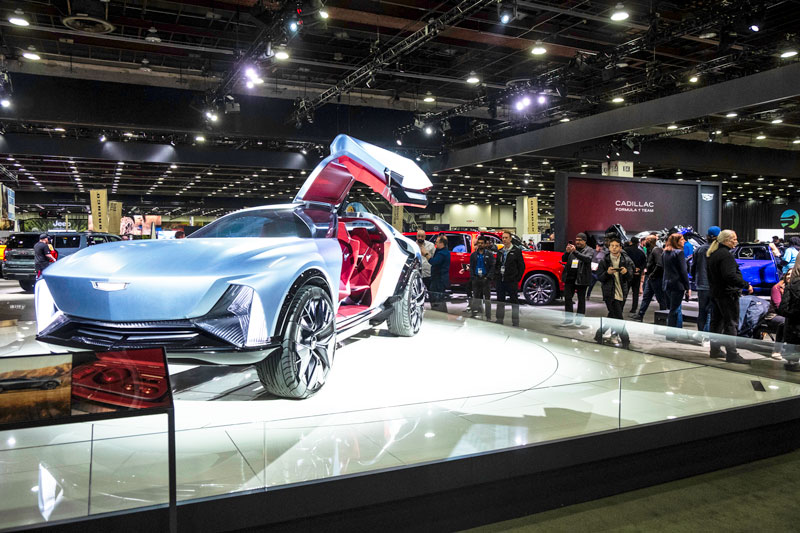
DETROIT — Federal and state leaders took to the stage at the Detroit Auto Show to talk about policy whiplash creating instability for manufacturers, stalling innovation and risking job losses as debate continues over how much government should shape the auto market.
In a fireside chat held at the auto show Jan. 14, former Democratic Party presidential candidate and Transportation Secretary Pete Buttigieg said rapidly changing federal policy is causing a potential setback to the industry.
“The other thing that I saw and heard speaking to each of the manufacturers who were displaying their incredible products was how much industry has had to contend with this whiplash from the policy side,” he said.
While every administration will have its own priorities, the changes in policy and how the industry has reacted to it has been a setback, he said, in particular referencing how administrations have handled electric vehicles.
“When you have a technology that is ultimately more advanced, policymakers cannot just put the toothpaste back into the tube,” he said. “There is no question about whether this technology will be the future of the sector.”
Sen. Bernie Moreno, R-Ohio, who appeared via prerecorded responses during a panel Jan. 15, stated that policy uncertainty is creating problems for the industry. Things remained consistent until the Biden administration tried to make a push toward electric vehicles, he said.
“Nobody needs to be pro or against electric vehicles. The consumer is ultimately going to be the judge and jury on that. They make millions of decisions with their pocketbooks that drive car companies to decide what kind of vehicles to make. That was our mantra for a long time,” he said.
John Bozzella, president and CEO of the Alliance for Automotive Innovation, who appeared with Moreno, said the government should support innovation, safety, emissions reduction and mobility, but not dictate consumer choices.
“That’s a very different government ambition and partnership with industry than having the government tell customers what they can and cannot buy,” he said.
Bozzella said that a degree of certainty and clarity is also needed.
“One person’s clarity could be another person’s EV mandate,” he said.
Regulations need to be able to outlast changes in presidential administrations, he said. While the president is entitled to appoint cabinet secretaries to make market adjustments, “there’s a difference between making adjustments based on market conditions, the state of technology, the cost of those types of things and tearing the entire playbook up and starting off again,” he said.
These kinds of changes are what create a problem across the industry, he said.
Additionally, Bozzella said regulation around electric vehicles needs to stay at the same pace as the demand for the vehicles to help keep investments from becoming “stranded,” he said. While there is still a demand for EVs, it’s moving at a “more realistic” pace, he said.
“Those policies are important for the development of the market over time, but we are where we are right now,” he said. “So, I think you’ll see continued investment, but it’s going to be a slower pace.”
You May Also Be Interested In