Publication select ▼
Shutterstock image
MADISON HEIGHTS — The city of Madison Heights has applied for the federal Community Development Block Grant Program, hoping to cover lawn care expenses for seniors, home repairs for qualifying residents, and the cost of code enforcement officers to fight blight.
But officials are concerned that a downward trend in funding levels may limit what the grant can cover.
“If we lose this funding, it will limit our ability to support critical programs that many residents rely on, particularly seniors and low- to moderate-income households,” Madison Heights City Councilwoman Toya Aaron said. “The loss of CDBG funds would mean fewer resources for home repairs, neighborhood improvements and preventative services, which could ultimately lead to higher costs and challenges for the city in the long term. This funding helps us be proactive, and without it, our options become more limited.”
Cities submit their CDBG applications each year to Oakland County, which then combines them into a single submission to the U.S. Department of Housing and Urban Development, the group that administers the program. Approval typically takes more than a calendar year.
Madison Heights made its request on Dec. 3, 2025. The city’s Community and Economic Development Director Giles Tucker said the city used to receive around $140,000 each year. However, funding has declined in recent years, with around $108,200 awarded last year, a 20% drop from 2024. Overall, funding has fallen about 25% in the last five years.
Something that remains the same is what the city intends to do with the funding.
One is the lawn-cutting service that has been traditionally provided at no cost by the city to seniors and those with disabilities. The program is advertised at the Active Adult Center, 260 W. 13 Mile Road, and serves around 50-60 seniors each year.
“We will likely see reductions in service or the number of seniors we’re able to serve starting in 2027 if trends in funding persist,” Tucker said in an email. “Seniors frequently express their satisfaction for this program because it relieves them of a significant property maintenance cost that they’re unable to perform themselves, and that they otherwise would not be able to pay for on a fixed income.”
He noted that last year, the service was rebranded “senior seasonal yard cleanup” so that it can also be used for fall and spring cleanups, tree removals and snow removals. But due to the funding decline, the city may only be able to offer lawn cutting.
“Public service programs like this not only maintain the appearance of neighborhoods — they also provide seniors peace of mind and help them stay in their homes and live more independently,” Tucker said.
To sign up for yard services, call the Active Adult Center at (248) 545-3464. Work usually begins in April.
Another program made possible with CDBG funding is the minor home repair program. Income-qualifying residents can use the program to help replace items such as roofs, furnaces and water heaters, complete porch repairs and remove dangerous trees — up to $10,000 in value. However, while the city once averaged about eight homes per year at $8,000 apiece, Tucker said that funding levels may again limit the scope — in this case, around three projects a year.
To apply for minor home repairs, call the Community and Economic Development Department at (248) 583-0831.
Sometimes, code enforcement officers are the ones who identify homes in need of the repair program. Code enforcement is also a category for which the city is seeking CDBG funding.
Currently, the city has two full-time code enforcement officers and is seeking an additional part-time officer. Most of the cost of the second officer is covered by CDBG funds.
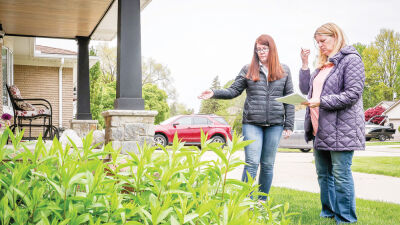
“(These funds) allow our officers the ability to cover more ground to identify property maintenance violations like roof, siding, porch/steps, garage, fences, sidewalk, driveway (trip hazards) in need of repair, overgrown grass/weeds, debris on the property, unlicensed/inoperable vehicles and rodent infestation,” Tucker said.
Madison Heights City Manager Melissa Marsh said that grants like CDBG are more important than ever for Michigan municipalities, due to ongoing pressures such as reduced state revenue sharing and inflation.
“They’re a critical tool for sustaining and enhancing municipal services and quality of life for residents,” Marsh said in an email.
Mayor Corey Haines agreed.
“Grants are essential for our community. They help pay for projects that our citizens want and need, without affecting dollars budgeted on the general fund,” Haines said. “They’re a tremendous way to help level the field when working within confined budgeting space.”