Publication select ▼
Shutterstock image
MADISON HEIGHTS — The deadline is approaching for the next round of funding for native plant gardens from the Madison Heights Environmental Citizens Committee, part of its Bloom Project. Past recipients have ranged from individual homeowners to local schools cultivating green spaces as hands-on learning experiences for kids.
Applications can be found online at tinyurl.com/2wx6tmzc. The due date is April 1.
To be eligible, the garden must be in Madison Heights, and if the applicant is not the owner of the property, they must have written permission from the property owner. The plan must be to establish or enhance a native plant garden during the 2026 growing season, and to maintain it in future growing seasons. All plants or seeds purchased must be native plants.
“It’s really cool,” said Katri Studtmann, a member of the ECC. “We’re one of the only municipalities in Oakland County that offers these kinds of grants.”
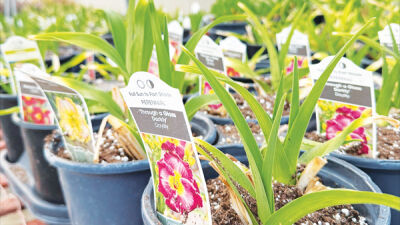
Native plants are species indigenous to the area that have evolved over the course of thousands or millions of years, making them better suited to local soils, rainfall levels, weather and climate conditions. They have little or no need for fertilizers or pesticides, naturally repelling invasive species. This makes them especially well-suited for pollinator gardens that attract beneficial creatures such as butterflies, bees and birds.
There are also plants that work well in rain gardens capturing stormwater runoff, and ones that are drought tolerant, using less water and growing in full sun.
Some examples of native plants include common milkweed and swamp milkweed, a key food source for the caterpillars of monarch butterflies — long-distance pollinators distinctive for their orange-and-black wings.
Other recommended plants include red columbine, butterfly weed, black-eyed Susan, prairie blazing star, Joe Pye weed, wild bergamot, New England aster and purple coneflower. There are also native shrubs such as New Jersey tea, buttonbush and serviceberry.
To identify whether a plant is native, the ECC recommends consulting a list by Wild Ones North Oakland, which can be found at northoakland.wildones.org/native-plant-nursery-list.
“It’s cool that first year when you grow them and they start flowering — you really get to see how many pollinators they attract, especially in an urban area,” Studtmann said. “It’s surprising but they really do come, the birds and butterflies — even from just a small garden.
“I think people will also be pleasantly surprised by how hardy they are, and how they bloom at all different times of the year, so you can really create a garden that changes with the seasons,” she said. “Depending on what you plant, you can get blooms from April through October.”
One past recipient was John Page Middle School, in the Lamphere Public Schools district. The Ecology Club there used a Bloom Project grant in 2023 to start a native garden in the courtyard that incorporated plants such as milkweed, bee balms, coneflowers and asters.
The garden was such a success that in 2024, it received special recognition from the National Wildlife Federation, America’s largest wildlife conservation and education organization, which declared it a “Certified Wildlife Habitat” through its Garden for Wildlife movement.
Madison Heights City Councilmember Emily Rohrbach is a member of the ECC and its council liaison. She said each grant’s funding amount varies, based on the scope of the project. Sometimes, even a small amount of funding is all it takes to get a project across the finish line.
“Especially in an urban environment like we have in Madison Heights, it is so important to take whatever small plot of land we have that we can control and make it better,” Rohrbach said. “We are pretty much fully developed; there is very little vacant land in the city of Madison Heights that can be improved. So, when everybody takes their small piece of land and makes the environment better for pollinators, for water usage, for air quality, for all these things, and when we all put in our part to make them better, together, I think that is such a powerful thing.
“Like sometimes, we think, ‘Oh, I’m just doing my little garden in my half-acre of yard,’ but the more we can each improve biodiversity on our little plot of land, when you put it together with your neighbors doing the same over and over, it creates a real shift in how we show up as a community to impact the environment,” she said.
Upcoming opportunities to learn about native plants include the workshop, “Plant Native! It’s for the Birds,” which will be held from 6 p.m. to 7:30 p.m. Wednesday, May 6 at the Madison Heights Active Adult Center, 260 W. 13 Mile Road, and the Native Plant Sale, from 2 p.m. to 5 p.m. Sunday, May 24 in front of Madison Heights City Hall, 300 W. 13 Mile Road.
The workshop will share tips on how to transform your yard into a year-round haven for birds by using native plants as food, shelter and nesting resources, while the sale will raise funds for the ECC by selling native plants from trusted vendors, with experts on-site to answer questions.