Publication select ▼

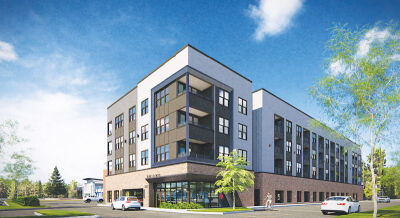
This rendering by Krieger Klatt Architects shows the layout of the parking behind the planned building at 1225 N. Main St.

This rendering shows the potential interior of the apartments.

ROYAL OAK — A brownfield plan for a residential development on North Main Street was approved in a unanimous vote following a public hearing during the City Commission meeting May 18. Mayor Michael Fournier was not in attendance for this meeting.
Mayor Pro Tem Amanda Herzog stepped in to fill Fournier’s role. Nobody spoke during the public hearing for the project.
The plan is to build a two-story, multiple-family building with 12 dwellings at the site of 1225 N. Main St. The property currently holds a vacant self-serve car wash. The City Commission approved this proposal in a first reading on Jan. 26 and a second reading Feb. 23.
The brownfield plan addresses environmental remediation and housing activities that the petitioner plans to undertake as part of this redevelopment, according to the proposal.
“Included within the brownfield plan are tables of estimated tax increment captures that plan would generate,” the proposal states. “If the plan is adopted, the captured tax increment revenues would be used to reimburse the petitioner for eligible costs of environmental remediation and housing development activities outlined in the plan.”
The estimated total of all proposed eligible costs is $515,348. The brownfield plan estimates the completed project would result in an increased taxable value of almost $1.5 million by the plan’s second year.
The amount could generate up to $65,000 in captured revenues that could be used to reimburse the petitioner for eligible costs, the proposal states.
Since the plan was adopted, the city and all other taxing jurisdictions would still receive property tax revenues from the property’s current or base taxable value of $118,100. Only the taxable value from the new construction would be used to reimburse the petitioner.
The reimbursement period would be in effect for 15 years beginning in 2027. According to the plan's estimates, eligible activities could be reimbursed within 12 years, by 2039.
Kirstie Ducourouble, project consultant at SME, said that this project would be a $3.4 million investment after demolition of the site and construction of the apartments.
According to Ducourouble’s presentation at the meeting, there will be 12 one-bedroom apartments, streetscaping and permeable pavement to reduce strain on the sewer system, and 15 parking spaces including some with EV charging stations.
Ducourouble outlined some of the things that they are going to be working on for the brownfield plan.
“It includes due care assessment and planning; the transportation and disposal of contaminated soils; the design, installation and testing of a vapor mitigation system to protect the future residents; the demolition and abatement costs related to both the building and site improvements; the paving; and anything that might be buried underground that they discover in construction,” she said. “$105,000 will go to infrastructure activities. This includes some substantial infrastructure connections for storm, electric and other utilities infrastructure, sidewalks, and landscaping along the right of way in the front of the building.”
Woody Gontina, planning commissioner and city commissioner, asked Ducourouble to indicate what the contamination was that was found on the site.
“My company went out and did a subsurface assessment back in October and November of last year. We collected soil samples, groundwater samples and soil gas samples,” she said. “We started on the northern end of the property, and when those results came back, there was contamination. We found PCE (tetrachloroethylene) in the soil and soil gas at the time.”
Ducourouble continued to say that they went back to the site to retest the entire footprint of the proposed site to test for volatile organic compounds. She said that data came back and the team made the recommendation to the development team that they should install a vapor mitigation system to protect the future residents.
Construction is slated to begin within the next few months.
You May Also Be Interested In