Publication select ▼
The Michigan State University Extension offers gardening resources that emphasize that beginners can successfully grow food in small spaces using methods like raised beds, containers and square-foot gardening.
Shutterstock image

METRO DETROIT — As spring planting season ramps up across the state, gardening experts say starting a home vegetable garden doesn’t require a large backyard or years of experience.
The Michigan State University Extension offers gardening resources that emphasize that beginners can successfully grow food in small spaces using methods like raised beds, containers and square-foot gardening.
William Randazzo, president of Urban Seed, echoed the sentiment, stating that the space needed to grow food can be a misconception.
“One of the biggest things I’ve learned is you don’t need a lot of land to grow a lot of food,” he said. “You can make a very small garden using square-foot gardening.”
Urban Seed, a Macomb County nonprofit aimed at providing fresh food, improving health and creating community connections, has operated a community garden in Eastpointe for 14 years. Most recently, Urban Seed reached an agreement with the city of Warren to lease a property to operate a similar garden there.
The Eastpointe garden is located at 16425 E. Nine Mile Road, and the Warren garden is located at 13690 Toepfer Road. Both gardens are open to the public, and educational and volunteer opportunities are hosted most Saturdays during the summer.
For first-time gardeners, Randazzo recommends starting small and focusing on a few favorite vegetables rather than attempting a large, complicated garden.
“A few things to consider for a beginner is what you want to grow,” he said. “I would always suggest they start small with a few of their favorites.”
Randazzo added that gardeners are also encouraged to consider how much physical work they can realistically manage. Container gardens and raised buckets can make gardening more accessible for older adults or people with health concerns, he said.
“There are so many different ways to grow,” he said. “It’s just a matter of what size pot or bucket per plant.”
Randazzo’s advice aligns with the MSU Extension’s broader “Smart Gardening” campaign, which promotes environmentally friendly gardening practices and research-based recommendations for home gardeners.
In a newsletter, the MSU Extension states that one of the first steps recommended is to test the soil, as nutrients and pH levels change over time.
The university offers a home lawn and garden soil test that measures pH, organic matter and key nutrients while providing personalized fertilizer recommendations.
“This is especially important in a new gardening location, where soil conditions can vary widely due to prior land use, construction or natural differences,” the MSU Extension states in a newsletter.
According to Randazzo, building healthy soil is another key to a successful vegetable garden.
“Mulch and compost are a huge component of gardening,” he said. “The more you build up your soil with organic material, the better it retains water, and the more nutrients it holds.”
Healthy soil also helps gardens become more resilient during dry stretches of summer weather.
“The soil should be a living structure to help feed the plants,” Randazzo added.
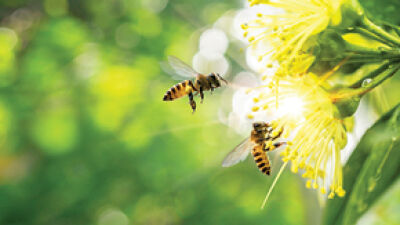
Gardeners are also encouraged to think beyond just vegetables and consider how flowers and companion plants can improve the health of a garden ecosystem.
“Look into companion planting,” Randazzo said. “Bring in as many beneficial insects as possible to help with the bugs that want to destroy your plants.”
This is helpful, Randazzo said, because experts warn against the heavy use of pesticides, as they can unintentionally harm beneficial insects.
“Sprays and chemicals kill good and bad bugs,” he said.
Randazzo said new gardeners shouldn’t be discouraged if early attempts are unsuccessful.
“Gardening is always an experiment,” he said. “Sometimes plants grow really well one year and not so much the next. So, if you’re having problems with something, don’t get discouraged.”
Madelyn Zamora, a member of the Warren Garden Club, also suggested using chicken wire and other things to protect plants from animals.
The Warren Garden Club will be hosting a rummage sale from 10 a.m. to 4 p.m. June 12 and 13. Zamora said there will be plenty of planters and pots large enough to grow vegetables available for sale.
“We will have planters, clay pots as well as more decorative planters at the rummage sale, and other garden decorations,” she said.
The rummage sale will be held at the Warren Historic District Old Village Hall, 5961 Beebe Ave. in Warren. Proceeds from the sale will go toward the club’s two $750 scholarships.
You May Also Be Interested In