Publication select ▼
GROSSE POINTE CITY — This August or November, Grosse Pointe City voters could be deciding whether or not to approve a millage to cover some public safety expenses.
Facing costs that are rising faster than revenues because of Michigan’s property tax structure, city officials are exploring ways they can continue to offer the same level of service to residents and not go bankrupt.
During a March 16 Grosse Pointe City Council meeting, City Manager Joseph Valentine outlined the city’s financial picture in the next several years.
“We have some challenges financially. … Ultimately, it’s not a sustainable path forward,” Valentine told the council.
For the upcoming fiscal year — which starts July 1 — Valentine said the city is anticipating a budget deficit of $545,000. To balance the budget, they might have to use fund balance or transfer money out of the capital projects fund, he said — but that’s not something the city can do every year.
“The gap between expenses and revenues continues to grow and our fund balance will continue to decrease,” Valentine said.
Based on the city’s five-year projections, the unassigned fund balance will be completely depleted by the 2028-2029 fiscal year.
Since the housing market collapse and the Great Recession circa 2008, the city has taken a wide range of cost-cutting measures, including outsourcing public safety dispatching, reducing staffing levels by 21 people, eliminating pensions for new employees, switching to a high-deductible health care plan, deferring equipment purchases and conducting utility audits to find areas of savings.
“The city has tried to be as efficient and effective as possible,” Valentine said.
Headlee rollbacks have led to the loss of $2.3 million to date, and they’re “increasing and compounding,” Valentine said. The state’s 1978 Headlee Amendment forces local units of government to lower their millage rate if the taxable value of current property rises faster than inflation. However, when property values decline — as was the case in 2008 — there’s no automatic roll back up to the original millage rate.
“New revenue is needed for us to be sustainable in the future,” Valentine said.
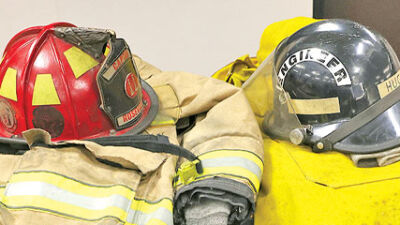
The largest area of expenditure for the city is public safety; for the 2024 to 2025 fiscal year, it accounted for $3.9 million of the general fund budget, or 56.1% of the total budget of nearly $7.49 million. Valentine said that’s to be expected, as it’s a department that operates 24 hours a day and has routine, costly vehicular and equipment needs.
A public safety millage “is probably our best bet going forward,” Valentine said.
In the coming fiscal year, Valentine said public safety equipment — including three patrol vehicles and replacement Tasers — is projected to cost about $377,000. Over the next four fiscal years, he said they’re anticipating nearly $1.4 million in capital expenditures for public safety.
A public safety millage “makes sense in cities with limited new development,” Valentine said.
As an older, developed community, Grosse Pointe City and the other four Pointes fall into this category.
Valentine said a public safety millage can be used to cover both equipment and personnel. Passage of such a millage would therefore free up general fund revenue for other expenses.
Based on 2025 taxable values, 1 mill would generate about $491,000 in the city, Valentine said.
“That plugs the hole (in the budget) and doesn’t do anything more,” Valentine said.
A levy of 2 mills would generate about $982,000 and would cover the budget shortfall and operational and deferred equipment purchases. A levy of 2.5 mills would raise enough funds that the city could set aside money for future Neff Park pool equipment and enhanced programming, Valentine said. For the average Grosse Pointe City homeowner, 1 mill would cost about $225 per year, 2 mills would cost approximately $450 per year and 2.5 mills would cost an additional $563.50 per year.
“We don’t have a whole lot of options,” City Councilman Terence Thomas said. “This is where I wish we had a more robust foundation” to tackle improvements at Neff Park.
Valentine suggested asking voters for a public safety millage for four years to close projected funding gaps. He said city officials could reevaluate the millage after that time.
“I know we have a lot of deferred maintenance and deferred equipment purchases,” Mayor Sheila Tomkowiak said.
Tomkowiak asked for more data on what the city would gain — or lose — at different millage levels, including 2 mills and 2.5 mills. City Councilman David Calcaterra also asked Valentine to give the council data on what 3 mills would mean and cover.
“We can’t do nothing,” Tomkowiak said. “We’ve got to do something for revenue.”
It wasn’t known at press time when the council might be considering millage amounts or ballot proposal language, although officials are hoping to put something on the ballot this year. At press time, officials were leaning toward putting the question before voters in November, when voter turnout is expected to be higher than it will be in August.