Publication select ▼
The Michigan High School Athletic Association, headquartered in East Lansing, has approved personal branding activities — also known as name, image and likeness rules — for student-athletes, effective immediately.
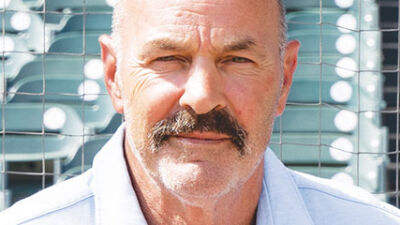
Photo provided by Geoff Kimmerly

EAST LANSING — The representative council of the Michigan High School Athletic Association has approved the expansion of personal branding activities, allowing student-athletes at MHSAA member schools to benefit from such opportunities.
Personal branding activities — also referred to as name, image and likeness — is already a significant part of collegiate athletics, and at the high school level, most of the country has already implemented a PBA or NIL policy.
“The positive of the MHSAA is that we’ve been able to see what’s happening in other states,” MHSAA Director of Communications Geoff Kimmerly said. “We’ve been able to speak to our colleagues in other states and find out that the PBA or NIL activities are having no effect on how educational athletics operate.”
Previously, the MHSAA had allowed some PBA opportunities, but those were limited to student-athletes having the ability to conduct camps, clinics and private lessons.
Now, student-athletes will be allowed to accept NIL opportunities such as commercials, product endorsements, personal appearances, autograph or photo sessions, merchandise, sports cards, apparel sales, group licensing, personal logos or acting as a social media influencer.
“We’re calling this personal branding activities. We feel that that’s a better description of what’s allowed,” Kimmerly said. “Obviously, there is some anxiety (from the public). ... I think a lot of people are disappointed with NIL at the college level, and of course they don’t want that to happen at our level.”
The NIL format within the NCAA has opened the door for schools to financially incentivize players if they agree to play for that program. The “pay for play” model has forever changed collegiate athletics, and the MHSAA wanted to make certain that any rule that was passed didn’t have the same effect.
“Anything that looks like a group activity or anything that looks like pay to play … we would not support,” Kimmerly said. “Look at what we’re allowing and what we’re not.
“Students cannot have their schools involved in any way, shape or form. No uniforms, identifying markings, and you can’t do these things on school grounds or during school hours,” Kimmerly said. “School people cannot be involved in facilitating the deals, donors can’t be involved, and boosters can’t be involved. So, really, this has to be third-party action between families and third-party entities.”
Kimmerly also said that any and all PBA opportunities must be approved by the MHSAA within seven days of the agreement being finalized. Other limitations include athletes receiving incentives based on performance, any deal that is connected to any school in any way, any opportunity that would take place at any MHSAA event and also any deal that endorses anything deemed inappropriate by the MHSAA.
“If we see something that doesn’t seem to be up to our level, of course we’re going to be looking into that,” Kimmerly said. “And if a student continues to do something that we don’t approve of, then that student is taking his or her eligibility into their own hands. And if a school gets involved in something where it shouldn’t be involved then that school is putting its MHSAA eligibility at risk.”
The original push for NIL at the collegiate level was intended to provide ways for athletes to make money off things like their own jersey sales, video games or commercials. Now, the NIL policy within the NCAA has evolved into something that the public didn’t plan for.
“This is the essence of what NIL was supposed to allow in the first place,” MHSAA Executive Director Mark Uyl said in a press release. “We’re confident we’ve crafted language that allows true NIL opportunities without affecting competitive equity among our member schools.”
Ultimately, this is meant to be a way for student-athletes to be rewarded for their likeness while also preserving the integrity of the MHSAA — and high school athletics in general. The MHSAA has said that this will not cause high school athletics to look like what collegiate sports have become.
“The MHSAA will guard the competitive equity we have promoted for more than 100 years and take with the utmost seriousness any attempts to break or blur this rule,” Uyl said in the release. “We have provided clear language and sufficient guidance on what is allowed to assist our schools as they navigate this ever-changing landscape.”
The approval of PBA/NIL for student-athletes is effective immediately.
To find more information and to see a list of frequently asked questions go to mhsaa.com/name-image-likeness.
Call Sports Writer Scott Bentley at (586) 498-1090.
You May Also Be Interested In