Publication select ▼

Shawn Dodd waters her vegetable patch at the garden.
Photo by Liz Carnegie
HAZEL PARK — When Charles Lisée helped launch the Hazel Park Community Garden in 2012, the intent was to turn urban gardening into a communal experience, where residents could enjoy creating fresh food together.
In 2023, Lisée took it a step further, creating the Hazel Park Garden Club — a group now 400 strong on Facebook.
This season, the club has leased 18 plots at the community garden at 21220 Merrill Ave. on the west side of Dequindre Road north of Eight Mile Road.
Anyone can join the group. The only requirement is a desire to garden.
“I think most of the gardeners that have come through are inexperienced. Often, it’s their first time having their own garden and growing their own food, so they essentially know nothing,” Lisée said. “But they do have the desire and a willingness to learn.”
In starting the club, Lisée drew upon his education as a student of urban studies working for a Wayne State University organization called SEED Wayne, focused on building sustainable food programs in Detroit.
Work there included an urban gardening program on campus teaching people how to grow their own food, as well as a project called Detroit Fresh on the city’s east side that encouraged corner stores, liquor stores and gas stations to carry fresh produce.
SEED Wayne targeted “food desert” neighborhoods — places in Detroit where residents had limited or unreliable transportation, getting their nutritional resources from one or two stores that were lacking in fresh food options.
“By teaching people how to create their own fresh food and encouraging stores to carry those options, we address disparities that lead to health issues such as obesity and hypertension,” Lisée explained.
He was also involved with the Wayne State Farmers Market, where he oversaw vendor sourcing, contract management, marketing and more. The experience provided him insight into managing large-scale operations.
With the Hazel Park Garden Club, Lisée aims to provide programs and workshops like those offered by SEED Wayne, tailored to the season and hosted at either the community garden on Merrill Avenue or inside the Hazel Park Community Center.
The workshops have spanned a range of topics: garden planning, seed starting, composting, organic pest management, weed management, efficient irrigation and more. Some programs lean more into the therapeutic aspect of gardening, such as meditation sessions, and even a songwriting workshop run by local singer-songwriter Audra Kubat.
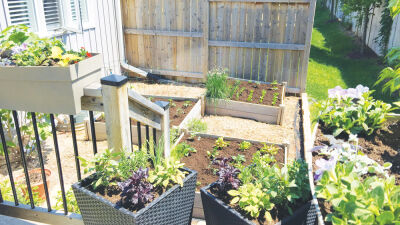
One recurring event is Volunteer Workday, at 9 a.m. on the second and fourth Sunday of each month at the community garden. Here, members work together on large infrastructure projects such as converting the garden area from grass to wood chips, building a compost station, combating invasive vegetation, building raised beds and managing raspberry bramble.
The club also meets at the garden on Wednesdays and Sundays for general maintenance.
“We share what’s happening in each plot. Like last night, because of the season, we were seeing pumpkins appearing in some plots, along with butternut squash and cucumbers,” Lisée said. “We harvested green beans, eating them right off the plant. I love those experiences where people taste it fresh for the first time. They’re amazed by the flavor, the freshness, the crispness.
“For some folks, it’s their first time seeing actual produce growing off a plant,” he added. “It’s magical.”
Once they begin exercising their green thumbs at the community garden, many residents end up working on their home gardens, as well. At press time, a garden tour was planned to visit the private gardens at 35 sites. That event was set for Aug. 17.
Beth Tabor, cofounder of the community garden, said the club members are very friendly.
“The group has been very valuable for people like me. I’ve been a stay-at-home mom for years now, and it’s just great to have a social group of likeminded people, sharing plants and seeds and fresh produce,” Tabor said. “It’s very educational, too. Even experienced gardeners can learn new things.”
Tabor said she and other members also maintain two native pollinator gardens at the site on Merrill Avenue, as well as a rain garden across the street near the Ford Administration Building.
“For me, there’s a therapeutic quality,” she said. “I just love being out there breathing the fresh air, getting in touch with nature, seeing native pollinators — even fireflies and bats later in the evening. It’s just this beautiful green space in the city. Gardening is such a good stress reliever.”
Kami Pothukuchi, a professor of urban studies and planning at Wayne State University, said that urban farming has many benefits for built-out communities.
“Urban farming helps increase access to fresh foods, makes productive use of vacant lots — many of which have few prospects for redevelopment — (and) brings neighbors together while also offering other social and economic benefits, and helps regenerate nature and sustain wildlife,” Pothukuchi said via email.
Having worked with Lisée before, she said she’s not surprised by his efforts in Hazel Park.
“I know that the connections urban agriculture offers to community networks, to soil and nature, and to the ability to see the rewards of one’s efforts, are all very meaningful to (Lisée),” Pothukuchi said. “I wish him well in these efforts.”