Publication select ▼

Featured Gallery (Click to view)

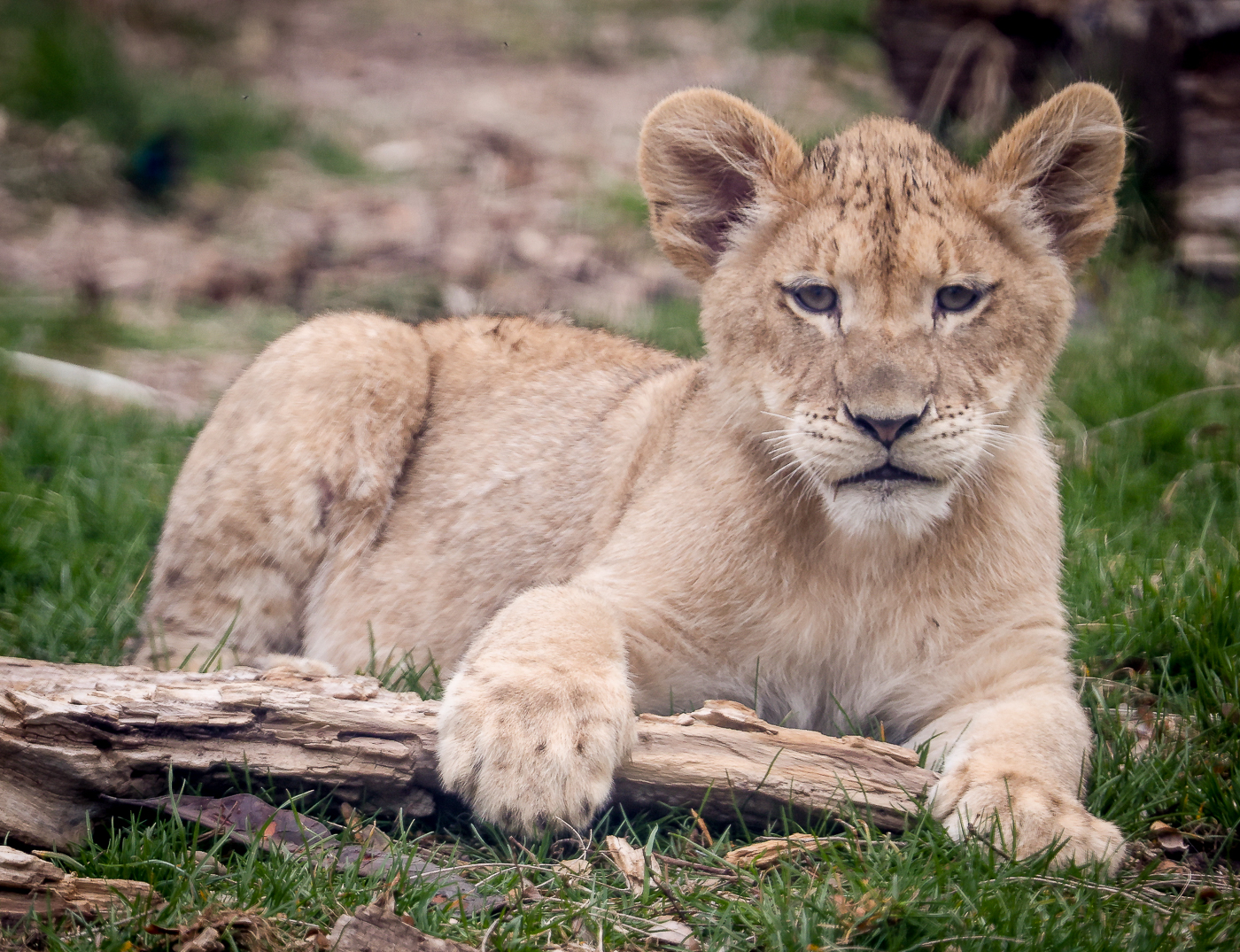
Dad Kalu keeps watch while one of his cubs scampers around him at the Detroit Zoo March 30.

Lion cubs Mosi, Aziza and Fahari mix it up a little during their debut in the African lion habitat at the Detroit Zoo March 30. Spunky Aziza often initiates the play fighting.

Two of the cubs take it easy and enjoy their new scenery March 30.

ROYAL OAK — Mosi, Aziza and Fahari, the Detroit Zoo’s three newest members of the African lion exhibit, experienced the outside world for the very first time on March 30.
Since the three babies were born in late November, they have been living inside a den box. In the den box, the babies were allowed time to nurse and grow while being protected from the wild, according to Melissa Thueme, associate curator of mammals at the Detroit Zoological Society.
The babies were born to mother Amirah and father Kalu, and they also live alongside Amirah's sister, Asha.
“You can see they are exploring all the rock work in the back and playing with mom Amirah and Asha, and a little bit with Kalu; he's watching and making sure everybody is safe,” Thueme said.
The babies ran around like crazy after they were released into the enclosure at 8:30 a.m., biting sticks, play-fighting with each other, and jumping all over Amirah and Asha.
“The cubs are definitely going to bring the activity up. Lions typically sleep a lot, up to 20 hours a day, but those cubs are keeping everybody awake,” Thueme said.
This is the first time Amirah has had cubs, according to Thueme, but not the first time she has taken care of a cub.
“Her sister, Asha, had a cub in 2020, but she was born with a C-section, so obviously she needed to recover from that surgery, so Amirah actually took care of that cub,” she said. “So, she was kind of a foster mom and played a big role in that.”
Amirah originally had four cubs, according to Thueme, but the fourth had complications and had to be put down.
Having new baby cubs in the zoo is going to bring a lot of much-wanted attendance to the zoo, according to Thueme.
“I am sure this is going to be a big hit; we are thrilled that they are outside as well,” she said. “It’s spring break for the schools, and everybody has been watching them (the cubs) on social media because they haven’t been outside, so everybody is going to be thrilled.”
Thueme said that when visiting the cubs, it’s important to be patient if you want to see them in action.
“Amirah will choose if they can come outside or not, and with the weather in Michigan, the weather has to cooperate for the cubs to be outside safely,” she said. “So, if you come by and they are not out, swing back and try again later, because they might be inside and outside.”
Each of the cubs have their own unique personality, Thueme said.
“They are all completely different. Fahari — he’s the male — he is quiet, reserved and calm, and then Aziza — she is the second girl — she is spunky. She's always initiating the tackling and the play fights, and she’s just silly, you know?” Thueme said. “And then Mosi is kind of somewhere in between. She’s curious, but exploring.”
It’s important to have cubs like this at the zoo to help with the maintenance of the lions in captivity.
“We are part of the species survival plan, or the SSP, and that maintains the genetic health of lions or other species in captivity, so it’s really important to attribute that,” Thueme said.
Jill Moyse, senior director of animal care, said that it’s a super fun experience to have the new cubs outside.
“It's really exciting to see Amirah be such a great mom and Kalu being such a great dad. He's a first-time dad, so he’s really tolerant of the cubs, and playful,” Moyse said. “So, that’s exciting to see.”
The lion cubs are currently on a diet of mom’s milk, according to Moyse. Eventually, they will move to a special formulated zoo diet of meat that comes from a special manufacturer that specializes in carnivore meat for animals at zoos.
“Mom is producing a lot of milk, and then they will gradually start to investigate food,” she said. “So, maybe mom has some meat or some bones, and they will start kind of picking it up and playing with it.”
As a part of the SSP, the cubs will have the chance in two to three years to move to other zoos and potentially start their own families, Moyse said.
“They will become full-grown around 2 to 3 years old, so it really just depends on what is needed in the population,” she said. “So, ultimately, it would be great for these guys to go off to other zoos and to breed and have families of their own, but again, that would be in two to three years.”
The babies currently weigh around 40 pounds, according to Thueme, and they will continue to stick by mom’s side for the next few years.
“Lions are social cats. They live together as a pride anyway, so even once they get much older, you know 1, 2 years old, they will probably still be sticking together, because that’s how lions function,” she said.
For more information on the Detroit Zoo and the lions, visit detroitzoo.org.
You May Also Be Interested In