C & G Publishing

Website Login

Login with Facebook
Sign in using Facebook

Shop

July 13, 2011

Green living: simple, affordable, sustainable

Programs offer incentives for energy-saving projects

By Christa Buchanan
C & G Staff Writer

While protecting the environment is an essential component of green building, the priority for many people is reducing energy costs.

The nice thing about green building, said Jacob Corvidae, LEED AP green programs manager at WARM (Weatherization and Retrofit Maintenance) Training Center in Detroit, is that “the two go hand in hand” — not to mention there are many programs available to help offset the costs of energy-efficiency related projects.

“Unlike in the past, there are a lot of incentives for doing energy-saving work, and we’re working to help people become aware of the programs available,” he said, adding that WARM has recently partnered with the Southeast Michigan Regional Energy Office to offer affordable home energy audits for Michigan homeowners via the Better Buildings for Michigan program.

“A lot of people think they are doing OK on energy consumption and don’t really realize how much they are losing. If you are spending more than $150 a month on heating, you’re spending too much,” he said, adding that getting an energy audit gives homeowners a concrete idea of what’s possible in regard to saving energy — and money.

Corvidae cited rebate programs offered through local utilities and the Better Buildings program for energy audits and corresponding repairs; the Michigan Saves Energy Efficiency Loan Program, which provides low-interest loans for energy-efficiency related projects; the state’s Energy Efficient Home Improvement Personal Tax Credit, which offers a 10 percent tax credit of installed cost up to $150 on insulation, furnaces, water heaters, windows and appliances that are Energy Star or higher rated; and the Residential Renewable Energy Tax Credit that offers a credit of 30 percent with no upper limit on more extensive projects, such as geothermal heat pumps, solar systems, wind turbines, etc.

To better educate homeowners, WARM offers a plethora of resources on the best eco- and pocket-friendly practices, including the comprehensive “What Every Homeowner Should Know About Green Building” guide, which covers the five basic principles of green building — energy, air, water, materials and site integration — and offers suggestions for improving the safety and comfort of a home, as well as ways to save on utility costs.

“We have a bunch of exciting green programs under way right now,” said Corvidae, inviting people to learn more about eco-friendly, energy-efficient practices, as well as to tour the WARM Energy Center.

Greening the house proper
Green renovations on an existing structure can sometimes be difficult — and expensive — to incorporate, especially some of the newer green technology, such as soy-based closed-cell insulation, which has proven itself to be one of the best ways to seal a house and lower energy costs, as when it’s sprayed on, it seals all the cracks and crevices; “smart” electrical wiring, which allows the homeowner to control all electrical functions — Internet, cable TV, lighting, security, irrigation controls, etc. — remotely; and geothermal heating and cooling. These projects would require stripping the home down to the studs and tend to be costly, but may qualify for MI Save financing.

Many people already live in existing houses, the question for most homeowners is, which green practices can be both simply and economically integrated into the average, existing home?

Generally, Corvidae said, a good starting place is energy efficiency — simple things like lighting retrofits, using halogen or LED light bulbs and dimmer switches, improving insulation, installing low-flow plumbing and Energy Star appliances, and updating HVAC systems that are over 10 years old will pay off quickly.

The No. 1 way homeowners can reduce energy costs, according to Corvidae, is improving the house shell by eliminating air leaks by caulking and installing quality insulation.

“The funny thing is, a lot of times, people say ‘windows’ when talking about eliminating drafts, but really it’s the home’s shell. It’s not really exciting or high tech, but that’s where most drafts need to be eliminated — the amount of drafts in most houses is the same as having a window open all winter,” Corvidae said, noting that an energy audit can help pinpoint those areas.

Improving air quality is another important green aspect, as such health problems as asthma and allergies, are sometimes linked to regular household products: Using non-, or least less, toxic cleaners and bath products — WARM suggests visiting eartheasy.com for suggestions and recipes — opting for low VOC (volatile organic compounds) paints and limiting new carpeting, which releases toxic “off-gasses” into the air, are easy ways to improve air quality. Incorporating houseplants, which remove common household toxins from the air, into a home is another good way to improve air quality.

Making the outside greener
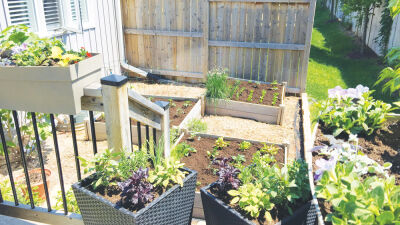
Limiting water and energy usage and costs isn’t limited to just inside the house: Simply incorporating such habits as using a rain barrel, composting and mulching is a good start to a more eco-friendly landscape, said Carol Windorf, a master gardener at the Macomb County Michigan State University Extension in Clinton Township.

“The rain barrels help me cut back on using water that’s treated; it’s just to supplement and help supply water to parts of the lawn I can’t reach otherwise,” she said, adding that mulch, like rain barrels, can also help cut down on water consumption.

“Mulch cuts down on the amount of water needed, retards weed growth and improves soil. It cuts back on work and water, and saves money, too. And you can mulch with all kinds of things: leaves and grass clippings, shredded newspaper and even paper from an (office) shredder, you can recycle it into mulch,” she said, adding that she uses a mulching mower to give her lawn extra nutrients.

Composting is another eco-friendly habit that Windorf incorporates into her garden. She keeps a small bin inside to collect vegetable scraps and peels — never compost meat waste — that she adds to the weeds, leaves and clipping in her compost bin outside.

“After a year, you get good, rich, worm-infested compost to add to your beds. It keeps all the waste from going to the landfill and the soil becomes rich with nutrients and worm castings,” she said, adding that the compost is ready when it has a deep black color.

Other ways to conserve and cut costs include using solar landscaping lights, establishing a rain garden, leaving mature trees on the lot, building a bat house for natural insect control, and among other eco-friendly practices, “xeriscaping,” or creating landscapes with native plants, which helps keep toxic chemicals out of local waterways, as plants that are evolved to work well in this climate don’t need as much water, fertilizers or pesticides — the same is true for “no-mow” lawns, said Corvidae.

“One big thing has been native plantings, and now, it’s moving toward no-mow lawns. In terms of environmental impact, running a lawn mower for an hour uses more energy than driving a car from here to Chicago. It saves gas and cuts down on pollution; it saves time because you need to mow less; and it saves money on gas and on water bills,” he said of the low-growing fescue grasses and “walkable” plants that can handle foot traffic, such as Irish moss, creeping thyme and Corsican mint — “there’s a lovely aroma in the air when you walk on it.”

Basically, Corvidae said, it’s all about sustainable living, creating affordable, healthy, energy-efficient and eco-friendly homes, and at the very least, simple waste management — capturing rain water, recycling, composting, etc. — can help create a healthier environment.

For more information about WARM, its programs and green resources, or to schedule a green program, visit www.warmtraining.org or call (313) 894-1030.

For more information about low-interest financing for energy-efficiency related projects, visit www.michigansaves.org.

For more information on available incentives, discounts and rebates, visit www.regional energyoffice.org. To learn more about the Better Buildings energy audits, visit www.betterbuildingsformichigan.org.

For gardening questions, contact the Macomb County MSU Extension master gardener hotline at (586) 469-5063 and the Oakland County hotline at (248) 858-0902. More information about native plants can be found at http://nativeplants.msu.edu.

You can reach C & G Staff Writer Christa Buchanan at cbuchanan@candgnews.com or at (586)498-1061.

Popular Stories

  • Viewed
  • Commented
  • Liked
  • Last 24 Hours
  • Last 7 Days
  • Last 30 Days