C & G Publishing

Website Login

Login with Facebook
Sign in using Facebook

Shop

Ferndale, Hazel Park

November 23, 2011

Ferndale and Hazel Park oppose state’s recommended court merger

By Andy Kozlowski and Jeremy Selweski
C & G Staff Writers

» click to enlarge «
Ferndale and Hazel Park oppose state’s recommended court merger
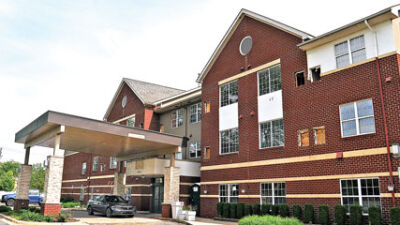
If a district court merger between Ferndale, Hazel Park, Madison Heights and Royal Oak takes place, it would likely mean the closure of the Ferndale 43rd District Court on Nine Mile Road.

FERNDALE/HAZEL PARK — Officials from the two cities recently voiced their concerns in Lansing over the state of Michigan’s proposed merger of local district courts, which they argue would cost them more money even though it would reduce expenditures for the state.

State focused on improving efficiency
According to the 2011 Judicial Resources Recommendations that were issued in August by the State Court Administrative Office (SCAO), the administrative agency of the Michigan Supreme Court, the district courts in some southeast Oakland County communities are not operating as efficiently as they could be.

The report recommends that, due to a judicial excess of 0.6, the 44th District Court in Royal Oak reduce its judgeships from two to one by attrition. It also suggests that the court merge with the three 43rd District Court branches in Ferndale, Hazel Park and Madison Heights, which each have one judge and a combined judicial excess of 0.5.

This proposal is intended to save money for the state, which pays the salaries of district court judges, as well as for the cities by consolidating their courts into fewer facilities. However, all changes to the courts would have to be made by the state Legislature, not the SCAO.

Marcia McBrien, public information officer for the Michigan Supreme Court, explained that the SCAO’s recommendations are largely the result of a steadily decreasing workload at the district courts in all four cities, as well as the close proximity of the court buildings.

“There is less than eight miles between all four of those courts,” she said. “In Ferndale and Hazel Park, you could probably roll a bowling ball down the street from one and hit the other.”

In all, the 2011 Judicial Resources Recommendations advise the elimination of 45 of Michigan’s 584 district court judgeships, as well as four Court of Appeals judgeships, which would amount to savings of about $8 million per year for the state. The report indicates that many districts have seen declining populations and reduced case filings in recent years, which do not justify the current number of judgeships.

Still, over the past two decades, the removal of these positions has been extremely rare in Michigan. McBrien noted that since 1989, the Legislature has actually added 30 new judgeships even though the size of the state population and the number of case filings have both decreased during that period.

The SCAO is hoping to reverse that trend this time around, however. “We don’t want to have a court system that is more than what the taxpayers need,” McBrien said. “We understand that change can be disquieting, but we’re trying to look at the bigger picture here. There are real opportunities to make the entire state court system operate more efficiently by having some district courts work together, share resources and make better use of what they have.”

Cities worried about additional costs
This approach has not gained much support from local communities, however. Ferndale Police Chief Tim Collins and City Manager April McGrath were part of a group of officials who traveled to Lansing on Oct. 27 to testify against the proposed merger before the state House of Representatives’ Judiciary Committee. They argued that the state is attempting to reduce its own expenses while causing significant cost increases to the municipalities.

“If the State Court Administrative Office wants to save money in the district court system, we’re not opposed to that,” Collins said in a subsequent interview. “We just want to be consulted on the local level so that we can have a voice in these discussions. Our position is that this may have a negative effect on us, so we would like to have the ability to opt out of this plan.”

As Collins pointed out, the biggest and most immediate problem is that there is no existing building that could house all four district courts, so one of the existing facilities would have to be renovated or a new one would have to be built. Then, if a combined district court was established, Collins estimated that it would cost his department an additional $150,000 per year in overtime costs.

“Right now we’re just using existing manpower to transport prisoners across the street (to the district court),” he explained. “But under this new system … we would have to bring in extra officers and pay them overtime to drive them over to the court building and then drive them back here.”

McBrien indicated that the state is looking into the use of camera equipment that would allow local courts to hold many court proceedings via video conference and greatly reduce the need for prisoner transport. But she also admitted that this technology is not yet in place in most cities and would be expensive to implement.

For Collins, the issue ultimately comes down to finding the right balance between what is good for the state and what is good for the cities.

“I’m not calling (the SCAO) liars — these recommendations may very well save the state a boatload of money,” he said. “But if the trickle-down effect is that this costs the local entities a lot of money at the same time, then that’s not fair and that’s not right. This should not be a one-size-fits-all solution.”

Hazel Park City Manager Ed Klobucher agreed. He and Police Chief David Niedermeier also testified before the House Judiciary Committee on Oct. 27 and spoke out against the merger proposal.

Klobucher noted that in Hazel Park, where City Hall, the Police Department and the District Court are all located in the same complex, police officers only have to take prisoners upstairs for their court appearances. If their court facility were relocated to a different site, he said, it would cost Hazel Park taxpayers more than $200,000 annually in additional expenses for overtime and transportation.

Then there is the overriding issue of finding a building large enough to house four district courts. “Hazel Park does not have the ability to accommodate any additional court activities here,” Klobucher said. “We are set up for Hazel Park, and Ferndale cannot accommodate us, and Madison Heights cannot accommodate us. There would have to be a new facility constructed or an existing one modified, and who would pay for that? It just doesn’t make any sense.”

Like Collins, Klobucher is only in favor of a district court consolidation if it makes sense for all parties involved, especially the local taxpayers.

“We’re not opposed to the state saving money,” he said. “We encourage the state to do it whenever the changes will really result in significant savings for the taxpayers. We want to make sure, though, that they don’t end up costing us more money because our situation is unique. In our case, it can’t save and it won’t save — it will only cost us. … And Ferndale is in the same boat.”

You can reach C & G Staff Writer Andy Kozlowski at akozlowski@candgnews.com or at (586)279-1104.

You can reach C & G Staff Writer Jeremy Selweski at jSelweski@candgnews.com or at (586)218-5004.

Popular Stories

  • Viewed
  • Commented
  • Liked
  • Last 24 Hours
  • Last 7 Days
  • Last 30 Days